
Frequently Asked Questions
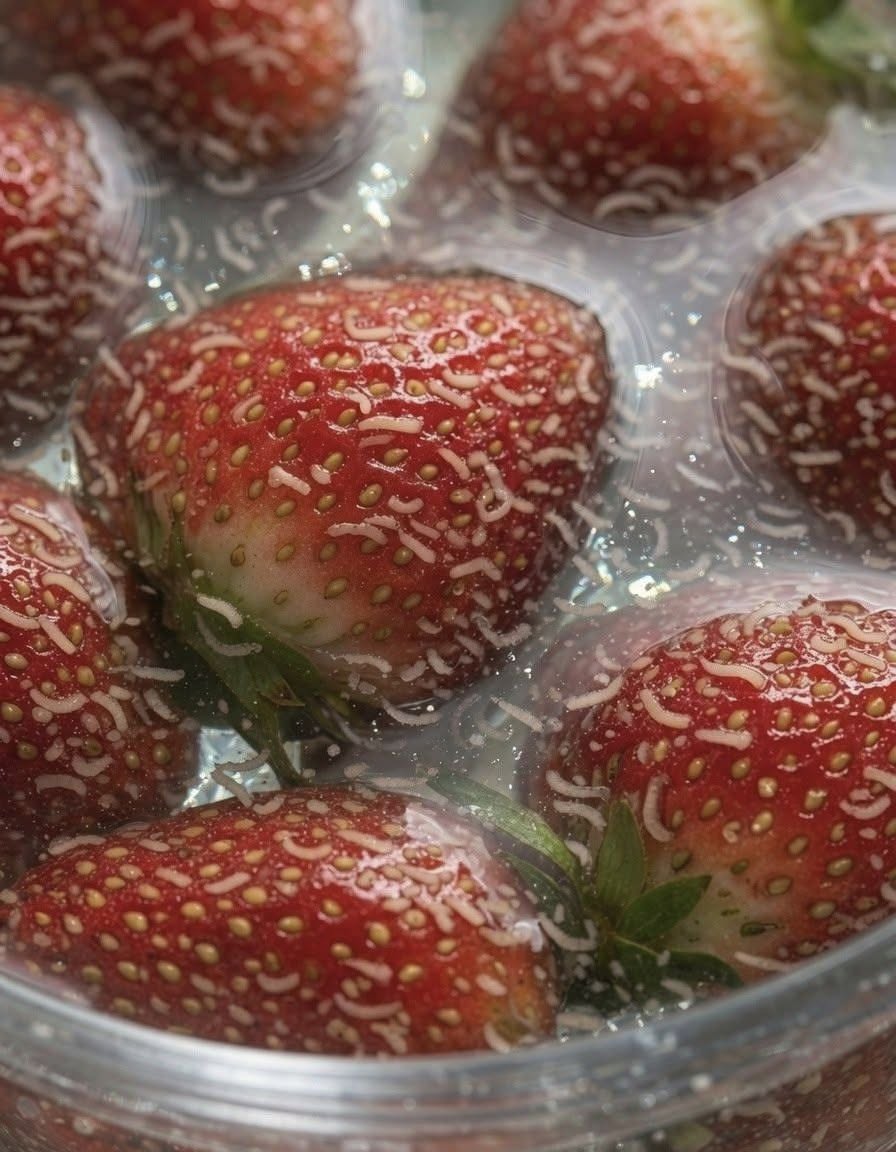
Q: Does finding larvae mean the strawberries are rotten or unsafe?
A: Not necessarily. The presence of larvae indicates that fruit flies laid eggs in the berries, which can happen even with fresh, ripe fruit. While it’s unappetizing, it doesn’t automatically mean the fruit is rotten or unsafe. However, if the berries are also mushy, moldy, or have an off smell, it’s best to discard them.
Q: Can I prevent this from happening altogether?
A: While you can’t completely prevent fruit flies from laying eggs (especially if you buy organic or from local farms), you can minimize the risk by:
Buying from sources with good pest management
Storing berries in the refrigerator immediately
Using the salt water soak before eating
Consuming berries while they are fresh
Q: Are organic strawberries more likely to have larvae?
A: Organic strawberries may have a slightly higher likelihood because organic farming restricts the use of certain synthetic pesticides. However, this is often seen as a trade-off for avoiding chemical residues. Many people feel that the salt water soak is a small price to pay for organic produce.
Q: Should I throw away berries if I see larvae?
A: That’s a personal choice. If the idea of eating them bothers you (and that’s completely understandable!), you can discard them. However, if you’ve done the salt water soak and rinsed them thoroughly, the berries are safe to eat. The larvae themselves are not harmful.
Q: Does cooking the strawberries kill the larvae?
A: Yes, cooking or heating the strawberries (like making jam, pie, or sauce) will kill any larvae. If you’re uncomfortable eating them raw, cooking is a great alternative.
A Compassionate Closing Thought
If you are reading this after experiencing the surprise of finding tiny creatures in your strawberries, please take a slow, deep breath and give yourself a gentle smile.
🍓 This is a natural part of eating fresh, whole foods. Strawberries grow close to the ground, in the open air, surrounded by nature. They are not manufactured in a sterile factory; they are living things that interact with the ecosystem. Finding evidence of that interaction can be unsettling, but it’s also a reminder that you are eating real, natural food.
🍓 You are not doing anything wrong. Finding larvae doesn’t mean you bought “bad” strawberries or that you’re a careless shopper. It’s simply a fact of nature, especially with organic or locally-grown produce. Give yourself grace.
🍓 Knowledge is empowering. Now you know about the salt water soak, and you have the tools to clean your berries with confidence. You’re not powerless; you’re resourceful and capable.
🍓 Your feelings are valid. If the thought of eating berries with larvae makes you uncomfortable, that’s okay! You can choose to cook them, discard them, or take extra precautions. Honor your own comfort level.
🍓 The benefits still outweigh the ick factor. Strawberries are packed with vitamin C, antioxidants, and fiber. They’re delicious, nutritious, and wonderful for your health. Don’t let this one unsettling experience rob you of the joy of fresh fruit.
Those tiny white wrigglers are not a sign of failure.
They are just a part of nature’s cycle.
They are a reminder that real food comes from the earth.
And they are an opportunity to learn a simple, effective cleaning trick.
So, the next time you bring home fresh strawberries…
Give them a gentle salt water bath.
Rinse them with care.
And enjoy the sweet, juicy reward of nature’s bounty.
What is your favorite way to enjoy fresh strawberries? Do you have a go-to cleaning method or a cherished summer recipe that always brings you joy? Share your practical wisdom and cozy kitchen memories respectfully in the comments below.
For Complete Cooking STEPS Please Head On Over To Next Page Or Open button (>)


