
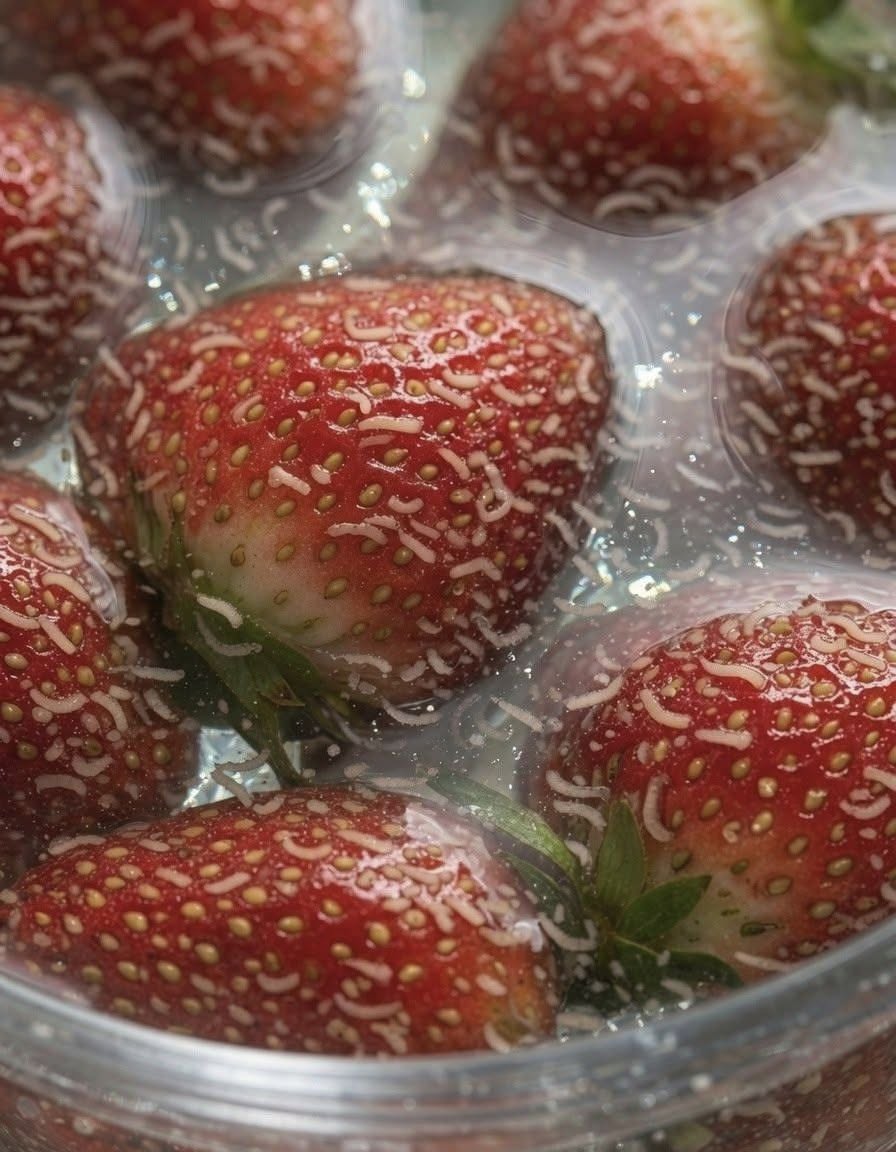
Seeing tiny white creatures moving in your fresh fruit can definitely be surprising—and let’s be honest, a little unsettling. You’re looking forward to enjoying those sweet, juicy strawberries, and suddenly you’re faced with something you never expected.
This topic has recently gained attention online, leaving many people wondering whether their favorite summer berries are still safe to eat. If you’ve experienced this, please take a slow, deep breath. You are not alone, and there is no need to panic. Let’s gently explore what may be happening inside your strawberries, the science behind the popular “salt water test,” and how you can prepare your fruit with confidence and peace of mind.
🔬 What Are the Tiny White Creatures in Strawberries?
If you’ve ever placed strawberries in salt water and noticed tiny white “worms” coming out, you’re not alone. These small creatures are usually larvae (maggots) of certain fruit flies, not actual worms.
They are extremely small—often about 1 to 3 millimeters long—and because they are pale and almost transparent, they can be very hard to see while they are inside the berry.
How They Get There:
The larvae develop within the fruit because the soft, sugary interior provides an ideal food source. A female fruit fly lays her eggs just beneath the skin of the berry, and once the eggs hatch, the larvae remain inside the fruit while they feed and grow. Warm, humid conditions allow this process to happen quite quickly.
The Insect Responsible: Spotted Wing Drosophila
The insect commonly responsible for this is called the spotted wing drosophila (SWD). Unlike many fruit flies that prefer fruit that is already rotting, this species often targets healthy, ripening fruit still on the plant.
Key Characteristics:
Adult SWD flies are tiny insects with red eyes and light-colored bodies
Male flies have distinct dark spots on their wings (hence the name)
Female flies have a specialized egg-laying organ that allows them to pierce the skin of firm fruit and deposit eggs inside
They can affect crops such as strawberries, blueberries, cherries, and raspberries
🧂 Why Salt Water Makes the Larvae Come Out
Many people soak fruit in salt water as a cleaning method. A common mixture is about one tablespoon of salt per cup of water. When berries are submerged, the salt changes the surrounding environment.
The Science of Osmosis:
Through a process known as osmosis, the saltwater draws moisture away from the larvae. This creates stress for them, causing them to move out of the fruit and into the water. Once they emerge, they become visible to the naked eye.
It’s a bit like the larvae are saying, “This environment is no longer comfortable for me!” and making a quick exit.
❓ Are These Larvae Harmful?
The Reassuring Truth:
While the thought of eating larvae is certainly unappetizing, the good news is that these fruit fly larvae are not harmful to humans.
Here’s why:
They are not parasitic and do not carry diseases that affect humans
They are simply feeding on the fruit, not on anything toxic
Accidentally consuming them is unpleasant but not dangerous
Your stomach acid would easily digest them, just like any other protein
However: Finding them is a sign that the fruit may be overripe or has been sitting for too long. While not harmful, it’s perfectly reasonable to prefer fruit without larvae, and there are simple steps you can take to minimize their presence.
How to Clean Your Strawberries with Confidence
You don’t have to give up enjoying fresh strawberries! Here are gentle, effective methods to clean your berries and minimize any unwanted guests.
The Salt Water Soak Method
Mix the Solution: Combine 1 tablespoon of salt per cup of cool water in a large bowl.
Submerge the Berries: Gently place your strawberries in the salt water. Do not overcrowd the bowl.
Wait Patiently: Let them soak for 10 to 15 minutes. You may see tiny larvae emerge during this time.
Rinse Thoroughly: Remove the berries and rinse them well under cool, running water to remove any salt residue and dislodged particles.
Dry Gently: Pat them dry with a clean paper towel or let them air dry on a clean kitchen towel.
The Vinegar Rinse Alternative
If you prefer not to use salt, you can use a vinegar solution:
Mix 1 part white vinegar with 3 parts water.
Soak the berries for 5 to 10 minutes.
Rinse thoroughly under cool running water.
Dry gently.
Important Note: Always wash your berries just before you plan to eat them. Washing them too far in advance can introduce moisture that leads to mold and spoilage, shortening their shelf life.
📊 A Quick Guide to Strawberry Care
The Step
Why It Matters
The Gentle Tip
Buy from Reputable Sources
Farms with good pest management practices have fewer issues.
Support local farmers’ markets where you can ask about growing practices.
Inspect Before Buying
Catching issues early prevents disappointment at home.
Look for firm, bright red berries without soft spots or visible holes.
Store Properly
Proper storage slows down the life cycle of any potential larvae.
Keep berries unwashed in the refrigerator in a breathable container.
Clean Just Before Eating
Prevents premature spoilage and mold growth.
Wash only the amount you plan to eat immediately.
Use the Salt Soak
Effectively draws out any hidden larvae.
10-15 minutes is the sweet spot—longer isn’t necessarily better.
For Complete Cooking STEPS Please Head On Over To Next Page Or Open button (>)


